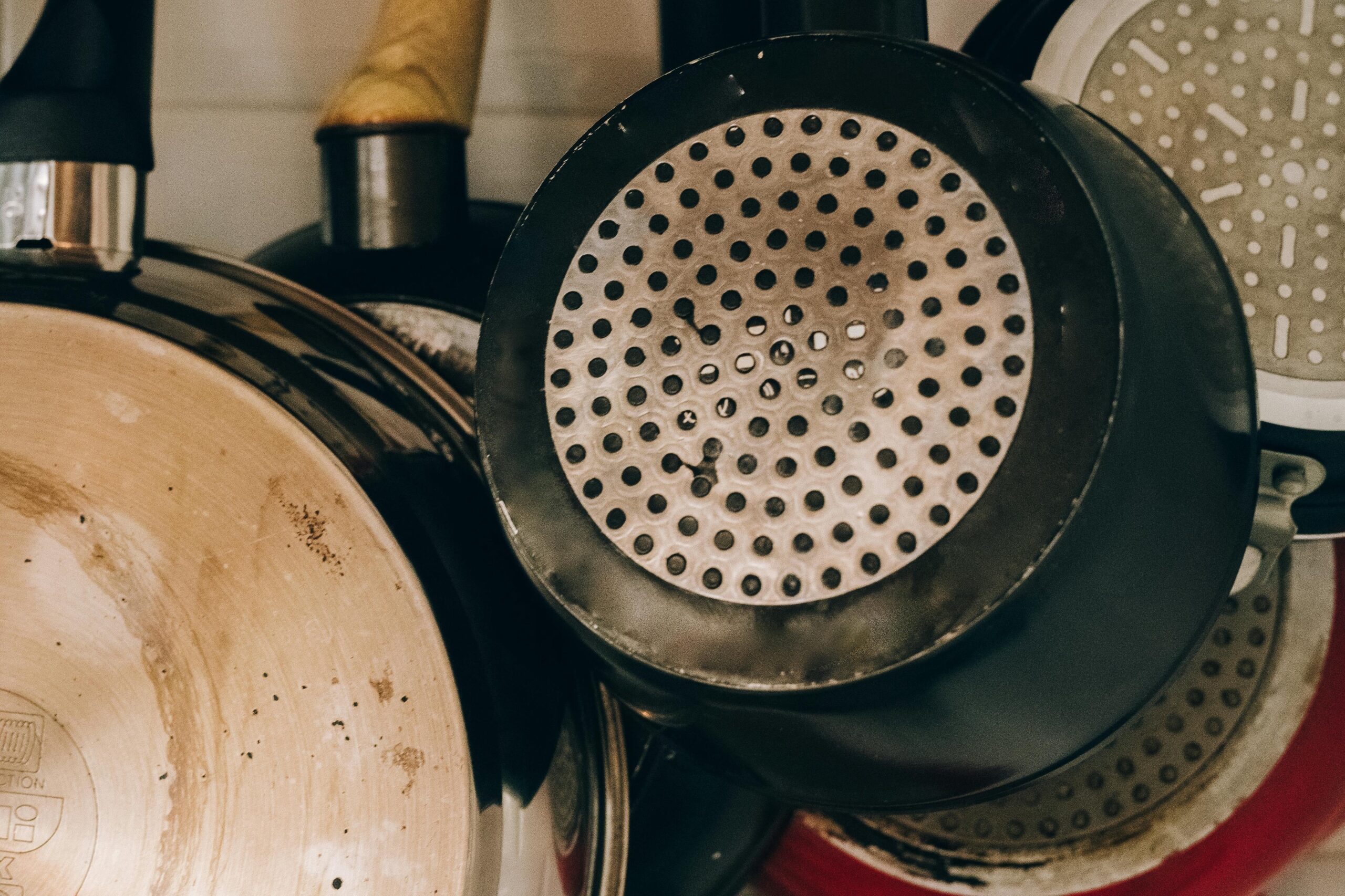
Burnt-on food and crusted grease don’t have to mean harsh chemical cleaners or hours of elbow grease. With a few pantry staples — coarse salt, lemon, baking soda, and plain hot water — you can restore stainless steel and cast iron cookware to usable condition while protecting the surface and the planet. Below are practical, step-by-step techniques and safety tips for cleaning both stainless and cast-iron cookware without aggressive solvents.

Why these ingredients work
Salt is an inexpensive abrasive that helps dislodge food without chemically attacking metal. Lemon (citric acid) helps dissolve mineral deposits and some carbonized food bonds. Baking soda is a mild alkali and also a gentle abrasive that loosens grease and neutralizes odors. Hot water softens and lifts stuck food so scrubbing is easier. Used together or separately, these methods are safe for most cookware when applied correctly.
General safety and do’s & don’ts
- Do avoid abrasive steel wool or aggressive scrubbing on nonstick coatings — use a soft sponge instead.
- Do not soak cast iron for long periods in water or use acidic cleaners extensively; they can strip seasoning.
- Use coarse salt for scrubbing cast iron; table salt works for lighter jobs but is less abrasive.
- Dry and oil cast-iron immediately after cleaning to prevent rust and maintain seasoning.
- For stainless, avoid letting bleach or strong acids sit on the surface; stick to gentle household items listed here.
Method 1 — Salt + Lemon (best for burnt-on spots and light discoloration)
Great for stainless steel and enamel-lined cookware; use cautiously on cast iron (short contact only).
- Sprinkle a generous layer of coarse salt (kosher or rock salt) over the affected area.
- Cut a lemon in half and rub the cut side over the salt, applying firm pressure. The salt abrades while the lemon releases citric acid to help dissolve stuck bits.
- Let the salt + lemon solution sit for 5–10 minutes on stubborn spots, then scrub with a sponge or nylon brush.
- Rinse thoroughly and dry. For cast iron, dry completely on low heat and apply a thin layer of oil to reseason.
Method 2 — Baking Soda Paste (ideal for stainless steel and tougher burns)
Baking soda is non-toxic and effective at lifting baked-on grime without scratching quality surfaces.
- Make a paste: mix baking soda with just enough water to form a spreadable paste (about 3 parts baking soda to 1 part water).
- Spread the paste over the affected area and let it sit for 15–30 minutes. For very stubborn spots, let it sit longer, but avoid prolonged contact on delicate finishes.
- Scrub with a non-scratch pad or brush. The paste both helps break bonds and acts as a fine abrasive.
- Rinse well. For extra lift, add a splash of hot water and repeat if necessary.
Method 3 — Hot Water Soak (the simplest first step)
A lot of problems can be solved by simply letting heat and moisture do the initial work.
- Fill the pot or pan with enough hot tap water to cover the burnt areas. Bring to a simmer for 10–15 minutes (use care with handles and steam).
- Turn off the heat and allow the water to cool slightly, then use a wooden or silicone spatula to gently scrape away softened food.
- If residue remains, add a tablespoon of baking soda while the water is still warm; it will help break up the residue.
- Empty, scrub gently, rinse, and dry.
Cast iron speciality method — Salt scrub and reseason
To remove stuck-on scraps from cast iron without stripping seasoning:
- While the pan is still warm (but not hot to the touch), pour in a generous amount of coarse salt.
- Use a folded paper towel or a stiff brush to scrub the surface; the salt lifts food without damaging the seasoning layer.
- Rinse with warm water (no soap), dry thoroughly over low heat, then apply a thin coat of cooking oil and heat the pan on the stove or in the oven for a few minutes to restore the seasoning.
Troubleshooting and tips for stubborn stains
- Heavy carbonized layers: Try a combined approach — simmer hot water with a tablespoon of baking soda, let cool, then use the salt + lemon or baking soda paste to finish.
- Rainbow discoloration on stainless: This often indicates heat stains; polish with a paste of baking soda and water or a small amount of white vinegar, then buff with a soft cloth.
- Deep rust spots on cast iron: Scrub to bare metal where necessary, then re-season: coat with oil and bake upside down at 375–450°F (190–230°C) for an hour.
- Nonstick pans: Avoid acid and abrasive scrubs; use warm water, mild dish soap, and a soft sponge. If coating is gone, consider replacement.
Maintenance and prevention
Clean pots and pans soon after use when possible — fresh food residue is far easier to remove. Use wooden utensils to minimize scraping. For cast iron, maintain a light oil film after every wash to protect seasoning. Regular gentle cleaning keeps surfaces in good shape and reduces the need for tougher measures.
Natural pantry methods are effective, inexpensive, and safer for your cookware and your home. With the right technique—salt and lemon for quick abrasion and citric lift, baking soda for alkaline cleansing and gentle scrubbing, and hot water to loosen stuck food—you can handle most burnt-on messes without resorting to harsh chemicals.





For cast iron, I always do the coarse salt scrub while the pan is warm. One caution: don’t let the lemon sit too long on cast iron or you’ll risk stripping seasoning.
Baking soda paste saved me from scrubbing for hours. Let it sit a bit and the grime almost falls off. Great eco-friendly alternative to chemical cleaners.
Tried the lemon + salt method on an old stainless skillet and it worked wonders. Quick tip: use a microfiber cloth to buff afterward for extra shine.
Hot water soak followed by a nylon brush is my go-to for enamel pots. The article covers all the basics clearly — thanks!